Bridges & Waterfront

Kun Iam Statue & Ecumenical Centre
A 20-metre-tall bronze statue of Kun Iam (Goddess of Mercy) on an artificial island, designed by Portuguese sculptor Cristina Rocha Leiria and inaugurated in 1999. The lotus-shaped base houses an ecumenical centre promoting interfaith dialogue.

Macau Fisherman's Wharf
Macao's first themed waterfront entertainment complex, opened by Stanley Ho, featuring replicas of world landmarks including a Roman Colosseum and Cape Town-style buildings. Divided into Dynasty Wharf, East Meets West, and Legend Wharf zones.

Macao Science Center
Designed by I.M. Pei and opened in 2009, this striking conical building on the waterfront features interactive science exhibitions, a planetarium, and an art gallery. Its spiral architecture symbolises the DNA double helix.
Chinese Temples & Heritage

A-Ma Temple
The oldest temple in Macau, built in 1488 and dedicated to the sea goddess Mazu. Believed to be where the name 'Macau' originated, its multiple prayer pavilions cascade down a hillside overlooking the Inner Harbour.

Kun Iam Temple
Founded in the 13th century and rebuilt in 1627, this is one of Macau's three largest Buddhist temples, dedicated to the Goddess of Mercy. The 1844 Treaty of Wanghia between the US and China was signed at a granite table in its gardens.

Lin Fung Temple
Built in 1592 during the Ming Dynasty, this spacious complex served as a boarding house for visiting Mandarins. Commissioner Lin Zexu stayed here in 1839 to ban opium trade; a memorial hall now honours his legacy.

Na Tcha Temple
A tiny folk religion temple built in 1888, standing in stark contrast right behind the Ruins of St. Paul's. Dedicated to the child deity Na Tcha, it symbolises the coexistence of Chinese and Portuguese cultures.

Sam Kai Vui Kun (Kuan Tai Temple)
Built during the Qing Dynasty (1723-1795), this temple served as the meeting venue for business representatives from three streets near Senado Square. Dedicated to Kuan Tai, the God of War and Righteousness.

Pak Tai Temple (Taipa)
Built in 1844 in Taipa Village, this Taoist temple is dedicated to Pak Tai, the Northern Emperor believed to control floods and fire. Set in a breezy square shaded by old banyan trees.
Gardens & Nature
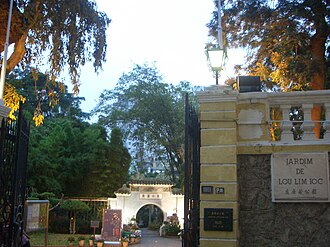
Lou Lim Ieoc Garden
The only traditional Chinese (Suzhou-style) garden in Macao, built in the late 19th century by merchant Lou Kau. Features wooded pavilions, zigzag bridges, bamboo groves, a large lotus pond, and rocks imported from mainland China.

Camoes Garden & Grotto
Macao's oldest park, established in the 19th century on a former East India Company estate. Contains a grotto where Portuguese poet Luís de Camões reportedly completed his epic poem Os Lusíadas. Spanning 26,063 sqm with banyan-shaded paths.
Modern Landmarks

Macau Tower
Standing 338 metres tall, this tower opened in 2001 and offers 360-degree observation decks plus the world's highest commercial bungy jump at 233 metres. Designed by New Zealand architect Gordon Moller.

The Venetian Macao
The world's largest casino and Asia's largest single-structure hotel, this 39-storey Cotai Strip resort recreates Venice with indoor canals, gondola rides, and a replica St. Mark's Square. Opened in 2007 with 3,000 suites.

Grand Lisboa
A 261-metre lotus-shaped tower that has become Macao's most recognisable modern landmark. Opened in 2008, it houses a Michelin-starred restaurant and a priceless collection of art including the Star of Stanley Ho diamond.
Museums

Macau Museum
Housed within Mount Fortress, this museum traces Macao's history from prehistoric times through Portuguese colonisation to the present. Three floors of exhibits cover civilisations, arts, traditions, and contemporary urban life.

Maritime Museum
Located opposite A-Ma Temple where the Portuguese first landed in 1553, this ship-shaped building explores Macao's maritime heritage, including fishing traditions, navigation technology, and the sea trade routes connecting East and West.

Grand Prix Museum
Reopened in 2021 after major renovation, this 16,000 sqm museum celebrates the Macau Grand Prix with racing cars from legends like Ayrton Senna and Michael Schumacher. Features VR experiences and four themed exhibition floors.

Macao Museum of Art
Established in 1999 beside the Cultural Centre, this is Macao's largest art museum with 4,000 sqm of exhibition space. Collections span Chinese calligraphy, historical paintings of Macao, and contemporary art from Southern China.

Taipa Houses Museum
Five charming peppermint-green colonial houses built in 1921, once residences of Macanese officials. Now a museum complex showcasing colonial-era domestic life, Macanese culture, and Taipa's history through furnished interiors and exhibitions.
Portuguese Colonial Heritage

Ruins of St. Paul's
Iconic stone facade and grand staircase of a Jesuit church built 1602-1640, once the largest Catholic church in Asia. Destroyed by fire in 1835, the baroque front uniquely combines Western and Eastern elements, as Japanese Christians fleeing persecution helped with its construction.

Mount Fortress
Built between 1617 and 1626 on a 52-metre hilltop, this is the oldest military fortification on the Macau Peninsula. It successfully repelled a Dutch invasion in 1622 and now houses the Museum of Macau.

Guia Fortress, Chapel & Lighthouse
A 17th-century fortress complex at Macau's highest point (91 metres), featuring the first Western-style lighthouse on the China coast (built 1864-1865) and a chapel with rare 17th-century frescoes blending Western and Asian imagery.

Moorish Barracks
Built in 1874 to house a regiment from Goa, Portuguese India, this striking building features Mughal-influenced architecture with Neo-Classical elements. Now serves as the Maritime Administration headquarters.

St. Lawrence's Church
One of Macau's oldest churches, first built before 1560 by the Jesuits. The current Neo-Classical structure dates from 1846, featuring elegant twin bell towers and stained glass windows in a residential hilltop setting.

St. Dominic's Church
Founded by three Dominican priests from Mexico in 1587, this pastel-yellow baroque church features a cream-coloured interior with ornate altars. The bell tower houses a museum of sacred art with 300 artefacts.

Dom Pedro V Theatre
Built in 1860, this is one of the first Western-style theatres in East Asia. Named after Portuguese King Peter V, its Neo-Classical green-and-white facade and 300-seat auditorium remain an active performance venue.
Streets & Squares

Tap Seac Square
Macao's largest public square, completed in 2007 on the site of a former stadium. Surrounded by heritage buildings including the Central Library and Historic Archives, designed by Macanese architect Carlos Marreiros with distinctive wave-pattern paving.

St. Lazarus District
One of Macao's most atmospheric neighbourhoods with narrow cobblestoned streets, pastel-coloured Portuguese houses, and art galleries. Home to St. Lazarus Church and a creative quarter with local artists' studios and cafes.

Rua do Cunha (Taipa Food Street)
Macao's first pedestrian zone since 1983, this narrow street in Taipa Village is famous for traditional snacks including almond cakes, egg rolls, and peanut candy. Named after the 81st Portuguese Governor of Macau.

Coloane Village
A tranquil village square on Coloane island paved in Portuguese wave-pattern cobblestones, facing a seaside promenade. Home to the Chapel of St. Francis Xavier, Lord Stow's Bakery (famous egg tarts), and the Tam Kong Temple.

St. Augustine's Square
An elegant hilltop square surrounded by some of Macao's finest heritage buildings including Dom Pedro V Theatre, St. Augustine's Church, and Sir Robert Ho Tung Library. Paved in Portuguese-style calcada tiles.
UNESCO World Heritage Sites

Senado Square
The heart of Macao's Historic Centre, paved with distinctive Portuguese wave-pattern mosaic tiles and flanked by pastel-coloured neo-classical buildings. A central gathering place since the Portuguese era with the iconic Leal Senado Building.

Leal Senado Building
Built in 1784 in Neo-Classical style, this was Macao's first municipal chamber and continues to host the city council. Features an elegant interior courtyard and a library modelled on the Mafra Palace library in Portugal.

Holy House of Mercy
Established in 1569 on the orders of the Bishop of Macao, this is one of the oldest charitable institutions in Asia. The white Neo-Classical facade on Senado Square houses a museum of Catholic relics and colonial artefacts.

Mandarin's House
A sprawling 4,000 sqm residential compound built in 1869, home of Qing Dynasty reformist Zheng Guanying. One of Macao's largest traditional Chinese houses, blending Chinese and Western architectural elements.

Sir Robert Ho Tung Library
Originally a 19th-century residence purchased by Hong Kong businessman Sir Robert Ho Tung in 1918. Donated to the Macao Government in 1955, it became a public library set in a beautiful garden with colonial architecture.

St. Joseph's Seminary and Church
Built by the Jesuits in 1758, this baroque church features a beautiful dome and is considered one of the finest examples of baroque architecture in China. The seminary trained missionaries for work across East Asia.

Lou Kau Mansion
Built around 1889 by wealthy merchant Lou Kau, this traditional Cantonese-style residence near Senado Square features grey brick walls, Indian teak interiors, and intricate plaster mouldings blending Chinese and Western design.

Protestant Cemetery
Founded in 1821, this peaceful burial ground near Camoes Garden contains the graves of notable early Western residents including artist George Chinnery and Robert Morrison, who compiled the first Chinese-English dictionary.

Section of the Old City Walls
A remaining section of the defensive walls built in 1569 from rammed earth (chunambo), located beside the Na Tcha Temple behind the Ruins of St. Paul's. One of the oldest examples of Portuguese military architecture in China.